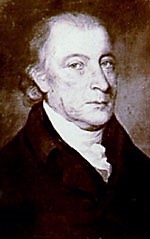
At this point it would help to once again quote a portion of Dr Church's letter to Samuel Adams giving his version of his actions upon assuming his position as Director General of the Hospital.
Continental Hospital, Cambridge, Aug 23,1775
Washington reacted to this on September 7,1775 expressing his desire to have "the utmost care taken of the sick (wherever placed and in every stage of their disorder)" but at the same time announcing his determination "not to suffer any impositions upon the publick." He then ordered his brigadier-generals, with their regimental commanding officers, to sit as a court of inquiry, and directed that they summon Dr Church and the regimental surgeons before them, investigate the matter, and report back to him. Dr Church would have to face six separate courts of inquiry. Courts composed of regimental commanders who appointed the regimental surgeons. Men who were not only from the same colony or even town but who were in the closest units in the armies, the regiments. Washington revealed his organizational concept of the medical service by stating that "when a soldier is so sick that it is not safe or proper for him to remain in camp, he should be sent to the General Hospital," Further, he declared that "there is no need of regimental hospitals...when there is a General Hospital so near, and so well appointed." If, as some believe, that this was an attempt by Washington to shore up his Director General, then it sure was a strange way of doing it. But Washington, at this point, was not the Washington that emerged at the end of the war. At this point, he was a new Commander, commanding units in a colony hundreds of miles away from Virginia with subordinates whom he hardly knew and, frankly, with New England troops that he found rather repulsive.
Dr Church must have been furious when he learned of Washington's decision to hold these courts of inquiry. He would have to appear, in person, in front of men with whom he had little in common and who he, undoubtedly considered his intellectual, social, and professional inferiors and justify his actions, even though he had been appointed by the Continental Congress to the position as the Director General of the Hospital.
We do not have a single shred of evidence as to what Washington thought of Church at this point or, indeed what Church thought of Washington. But one would imagine that the Harvard educated, London trained Doctor, a brilliant, renowned poet, polemicist, satirist, scion of a distinguished New England family, with a long record of Whig activity, and the self-educated, ruthlessly ambitious Virginia planter, land speculator, and surveyor had little in common.
The first court of inquiry was held by Brigadier General John Sullivan of New Hampshire on September 13, 1775. Regimental surgeons complained to the court that the general hospital denied them the drugs they demanded. Gen Sullivan protested that his wounded were being moved three to four miles to Cambridge to have their wounds dressed while his regimental surgeons remained idle. Sullivan complained:
Are the Dolorous Groans of the Disconsolate, agreeable to any human ear - That they should be still increas's by Dragging our sick...in Waggon Loads to Cambridge? Humanity shudders at the Prospect."
Sullivan insisted that fully half of the patients ordered by Church to the general hospitals refused to go.
"Declaring that they would rather Die where they were and under the care of those Physicians they were acquainted with."
Sullivan concluded that since the enlistments in the Continental Army were for only one year that Church's policies would so affect morale that soldiers would not reenlist.
We do not know how Dr Church responded to General Sullivan's accusations but he, apparently believed that matters were concluded in his favor since he sent the following letter to Gen Sullivan the very next day. It is quintessential Church:
Dr Church also alluded to a someone plotting to replace him in his letter to Samuel Adams. That he would mention it so openly in his letter to Gen Sullivan is an indication that there is substance to his belief. One gets the impression that General Sullivan knew who this person was. There is no definitive evidence just who this person might have been, but a reasonable suspicion could be placed on Dr Issac Foster of Massachusetts , one of the surgeons Dr Church hired to attend at the Cambridge Hospital. (See my post on the surgeons hired by Dr Church.). It is known that when Church was later replaced by Dr John Morgan of Philadelphia, Dr Foster and Lt Col Hand, a physician serving as a line officer in a Pennsylvania rifle battalion were competitors for the appointment. Foster was actually appointed to serve temporarily in Church's place after he was removed by Washington.
The inquiry at Sullivan's brigade was followed by inquiries at Gen Greene's and Gen Heath's brigade. We have no information as to what transpired during these two hearings, but within a few days, Church apparently took leave to visit his family.
The next record we have is of Church writing a letter dated 20 September 1775 to Washington requesting release from his position as Director General of the Hospital. I have not been able to discover a copy or the original of this letter. We know about it because of a letter written by Horatio Gates, Washington's Adjutant General, to Church.
Sir: I am directed by his Excellency the General to inform you that his unwillingness to part with a good officer alone prevents his complying with your request, in your letter of the 20th instant. He desires you would stay with your family some time longer, and if there then is no prospect of its being in such a situation as to permit you to return to your duty, you will receive a discharge pursuant to your letter.
Horatio Gates, Adjutant-General
Dr Church's wife and children are believed to have been residing with family friends in South-Eastern Massachusetts at this time so it is reasonable to assume he was there when he wrote this letter. We do not know what reasons(s) he may have given for his resignation but we do know that in later correspondence Dr Church said that he fell ill at this time. The precise nature of his illness is not known. In any event Dr Church returned to Cambridge to resume his duties and complete the series of Brigade inquiries into the hospital situation ordered by Washington. The inquiry at General Frye's brigade was held on September 24th so Church must have been back in camp by then. An inquiry in General Thomas' Brigade was scheduled for the 29th. That inquiry may never have been conducted since General Nathaniel Greene arrived in camp on 26th September with some earth shattering information.
So on Saturday, September 30, 1775, the following order was issued:
A Court of Inquiry ordered to sit this day in Brigadier-General Spencer's Brigade in relation to the dispute between the Director-General of the Hospital and the Regimental Surgeons is, on account of the indisposition of Dr. church, to be postponed until further notice.
Continental Hospital, Cambridge, Aug 23,1775
Honoured & dear Sir!
Accept my most sincere acknowledgements for the honour and favour of my late appointment., derived from you my Friend! and the rest of that august body, for whom (abstracted from Self-Consideration) I have ever felt the warmest Devotion, the most heart-felt Reverence: the most acceptable Expressions of my Gratitude, I am assured will be a zealous Application of myself to discharge the important Duties of my Commission.
An acquaintance with the economy of Hospitals derived from a Residence of almost three years in the London Hospitals, made the Task before me very acceptable, but I confess the extreme Disorders in which I found matters upon a closer scrutiny, rendered the attempt to effect a Change a very formidable One; a total Revolution was necessary, to fix upon any Principles at all: there existed near 30 Hospitals, each distinct and independent, and some of them under the Guidance and uncontrouled Jurisdiction of Surgeons who had never seen an Hospital; the demands yon the Commissary General and Quarter-master were so extremely frequent and rapid that they informed me, the Expense of supplies for the Surgeons exceeded all the other Expenses of the Army: a matter so ruinous to the Cause demanded, an instant remedy.
I immediately procured two good Houses in Cambridge, the one already improved as a Colony Hospital, the other a regimental sick-House, a perfect sink of Putrescence, filth and Disease; to these I have since found it necessary to add a third viz the House of the fugitive Judge Lea,
I found little difficulty with the Surgeons of this Colony, for having examined and appointed them, they considered me in the light of a Master or Director before, and readily conceded to my Orders; but I have had much difficulty with my Brethren of Connecticut &c, they viewed themselves as Lords of their little Dominions; each Surgeon had his Hospital, to which the officers submitted as matters of Right, already established by uninterrupted usage, and hugged as a Benefice by each distinct, some Surgeons divided the Regiments with their Col'., their Orders were undisputed at the publick stores: The Officers indeed groaned that Diseases became so grassant, the Committee of Supplies and the Commissary groaned with good Reason that they should never be able to answer the Demands.
a cabal has been formed against me, which now exists in a crumbling situation, I still persevere in demolishing these little Pagoda's, and altho much Art and much malice have been exercised to discredit the American Hospital, it is now arrived to such a degree of reputation that the Soldiers bless the happy Institution, and several of the Regimental Surgeons are soliciting mates Birth, at the loss of 30/pr Month, to improve themselves in the Practice of the Hospital.
We have now 200 Patients in three Houses, which go under the Denomination of Washington's Hospital, Lee's Hospital and Putnam's Hospital.[illegible] to the Brigade on this Quarter. We have likewise three Houses at Brookline to accommodate Roxbury Camp in which are 170 Patients, but these I am reducing to 2 Houses Loring's and Barnard's which I shall call Ward's Hospital and St Thomas's Hospital in honour of the two Generals on that Quarter.
I should be happy could every purpose be effected agreeable to the Disposition of Offices made by the Honle Congress, with the Allowance annexed to sundry of them. The number of Surgeons I apprehend must be enlarged to three more.
The Houses at Cambridge now improved for Hospitals are most advantageously situated to accommodate the Camps on Prospect Hill, Mystick, &c. And in the course of two days by which time I hope to compleat the Number of Beds & Slaw bunks [ some type of a bunk bed with straw as near as I can determine], will be filled and will contain about 240 Patients with their proper number of attendants. These Hospitals are not only insufficient to hold all the sick of both Camps, but they are so remote from Roxbury being 6 miles at least, that in many Cases it would be greatly inconvenient, and in case of an Engagement totally impracticable to remove the wounded men so far;
the Houses lately the property of Barnard and Loring are already made use of for the sick, stand very conveniently, and are sufficiently elevated & capacious these will accommodate the Camp at Roxbury, and the disposition of the Surgeons could stand thus: [Church names his seven surgeons]
I must entreat your Indulgence to mention one or two other matters - the sick thicken upon us so rapidly, that we are obliged to send the Recovering Men too early to the Camps; being obliged to do duty immediately, and being thereby exposed to all Weathers in their weak state, they frequently relapse; 4 out of 5 generally return to the Hospital within a Week after their Dismission. An Airing house, or as 'tis usually called a Convalescent Hospital is a wise and salutary Provision; here the Patients upon their recovery ought to be sent, to be kept upon a half-Diet and tonic medicines, till they have recovered such a degree of firmness, as to be able to do their duty in Camp without hazard - these Houses require nothing more than a good careful Mate or two to attend them, and to be daily visited by the Hospital Physician.........
I must here renew my solicitation to be supplied with Medicines, I will particularly attend to eke out the few on hand, to prevent distress for want of medicines before the rest arrive. 3 lb of Ipecac is our whole stock, for 400 sick men, and great part of them Dysenteries, and no more to be obtained this way. Tow-Cloth for Beds I am much embarrassed for, the stores are exhausted and none can procure as yet elsewhere....
The friction between the regimental surgeons and Dr Church continued. At the end August and the beginning of September 1775, Church actually thought that the tensions were easing because several regimental surgeons, being attracted by the educational opportunities in the reorganized hospitals, were accepting appointments as hospital mates at a 30 % reduction in pay. But then the frictions between the Army Hospital, headed by Church, and the regimental surgeons reached Washington.
 |
George Washington By John Trumbull
1780
|
Dr Church must have been furious when he learned of Washington's decision to hold these courts of inquiry. He would have to appear, in person, in front of men with whom he had little in common and who he, undoubtedly considered his intellectual, social, and professional inferiors and justify his actions, even though he had been appointed by the Continental Congress to the position as the Director General of the Hospital.
We do not have a single shred of evidence as to what Washington thought of Church at this point or, indeed what Church thought of Washington. But one would imagine that the Harvard educated, London trained Doctor, a brilliant, renowned poet, polemicist, satirist, scion of a distinguished New England family, with a long record of Whig activity, and the self-educated, ruthlessly ambitious Virginia planter, land speculator, and surveyor had little in common.
The first court of inquiry was held by Brigadier General John Sullivan of New Hampshire on September 13, 1775. Regimental surgeons complained to the court that the general hospital denied them the drugs they demanded. Gen Sullivan protested that his wounded were being moved three to four miles to Cambridge to have their wounds dressed while his regimental surgeons remained idle. Sullivan complained:
Are the Dolorous Groans of the Disconsolate, agreeable to any human ear - That they should be still increas's by Dragging our sick...in Waggon Loads to Cambridge? Humanity shudders at the Prospect."
Sullivan insisted that fully half of the patients ordered by Church to the general hospitals refused to go.
"Declaring that they would rather Die where they were and under the care of those Physicians they were acquainted with."
Sullivan concluded that since the enlistments in the Continental Army were for only one year that Church's policies would so affect morale that soldiers would not reenlist.
We do not know how Dr Church responded to General Sullivan's accusations but he, apparently believed that matters were concluded in his favor since he sent the following letter to Gen Sullivan the very next day. It is quintessential Church:
American Hospital September 14, 1775
Dr. Church presents his most respectful compliments and most heartily felicitates himself on receiving so honorary a testimonial of General Sullivan's approbation, as he met with the last evening at Headquarters. The Doctor esteems himself peculiarly happy that the undeserved prejudice against him is so totally removed which from frequent intimations he was apprehensive had possessed the general's mind. He flatters himself that his whole conduct, during the present unhappy conduct, will bear the strictest scrutiny. A regard to place, popularity, or the more detestable motive of avarice never influenced his conduct in publick life. The sole object of his pursuit, the first wish of his heart, was ever the salvation of his country.
The Doctor, nevertheless, in Justice to himself, and with respect to the man behind the curtain has influenced and took the lead in the opposition to him, must declare that although he could never stoop to act the parasite, play the buffoon, or become the herald of his own eminence in his own profession would feel the indignation of conscious merit should be put in competition with the person who vainly endeavours to supplant him.Hon General Sullivan
Dr Church also alluded to a someone plotting to replace him in his letter to Samuel Adams. That he would mention it so openly in his letter to Gen Sullivan is an indication that there is substance to his belief. One gets the impression that General Sullivan knew who this person was. There is no definitive evidence just who this person might have been, but a reasonable suspicion could be placed on Dr Issac Foster of Massachusetts , one of the surgeons Dr Church hired to attend at the Cambridge Hospital. (See my post on the surgeons hired by Dr Church.). It is known that when Church was later replaced by Dr John Morgan of Philadelphia, Dr Foster and Lt Col Hand, a physician serving as a line officer in a Pennsylvania rifle battalion were competitors for the appointment. Foster was actually appointed to serve temporarily in Church's place after he was removed by Washington.
The inquiry at Sullivan's brigade was followed by inquiries at Gen Greene's and Gen Heath's brigade. We have no information as to what transpired during these two hearings, but within a few days, Church apparently took leave to visit his family.
The next record we have is of Church writing a letter dated 20 September 1775 to Washington requesting release from his position as Director General of the Hospital. I have not been able to discover a copy or the original of this letter. We know about it because of a letter written by Horatio Gates, Washington's Adjutant General, to Church.
Cambridge September 24, 1775To Doctor Church:
Sir: I am directed by his Excellency the General to inform you that his unwillingness to part with a good officer alone prevents his complying with your request, in your letter of the 20th instant. He desires you would stay with your family some time longer, and if there then is no prospect of its being in such a situation as to permit you to return to your duty, you will receive a discharge pursuant to your letter.
Horatio Gates, Adjutant-General
Dr Church's wife and children are believed to have been residing with family friends in South-Eastern Massachusetts at this time so it is reasonable to assume he was there when he wrote this letter. We do not know what reasons(s) he may have given for his resignation but we do know that in later correspondence Dr Church said that he fell ill at this time. The precise nature of his illness is not known. In any event Dr Church returned to Cambridge to resume his duties and complete the series of Brigade inquiries into the hospital situation ordered by Washington. The inquiry at General Frye's brigade was held on September 24th so Church must have been back in camp by then. An inquiry in General Thomas' Brigade was scheduled for the 29th. That inquiry may never have been conducted since General Nathaniel Greene arrived in camp on 26th September with some earth shattering information.
So on Saturday, September 30, 1775, the following order was issued:
A Court of Inquiry ordered to sit this day in Brigadier-General Spencer's Brigade in relation to the dispute between the Director-General of the Hospital and the Regimental Surgeons is, on account of the indisposition of Dr. church, to be postponed until further notice.